


Rohloff vs. Pinion: Why We Chose the Speedhub for the Prospector
By Tumbleweed founder Daniel Molloy
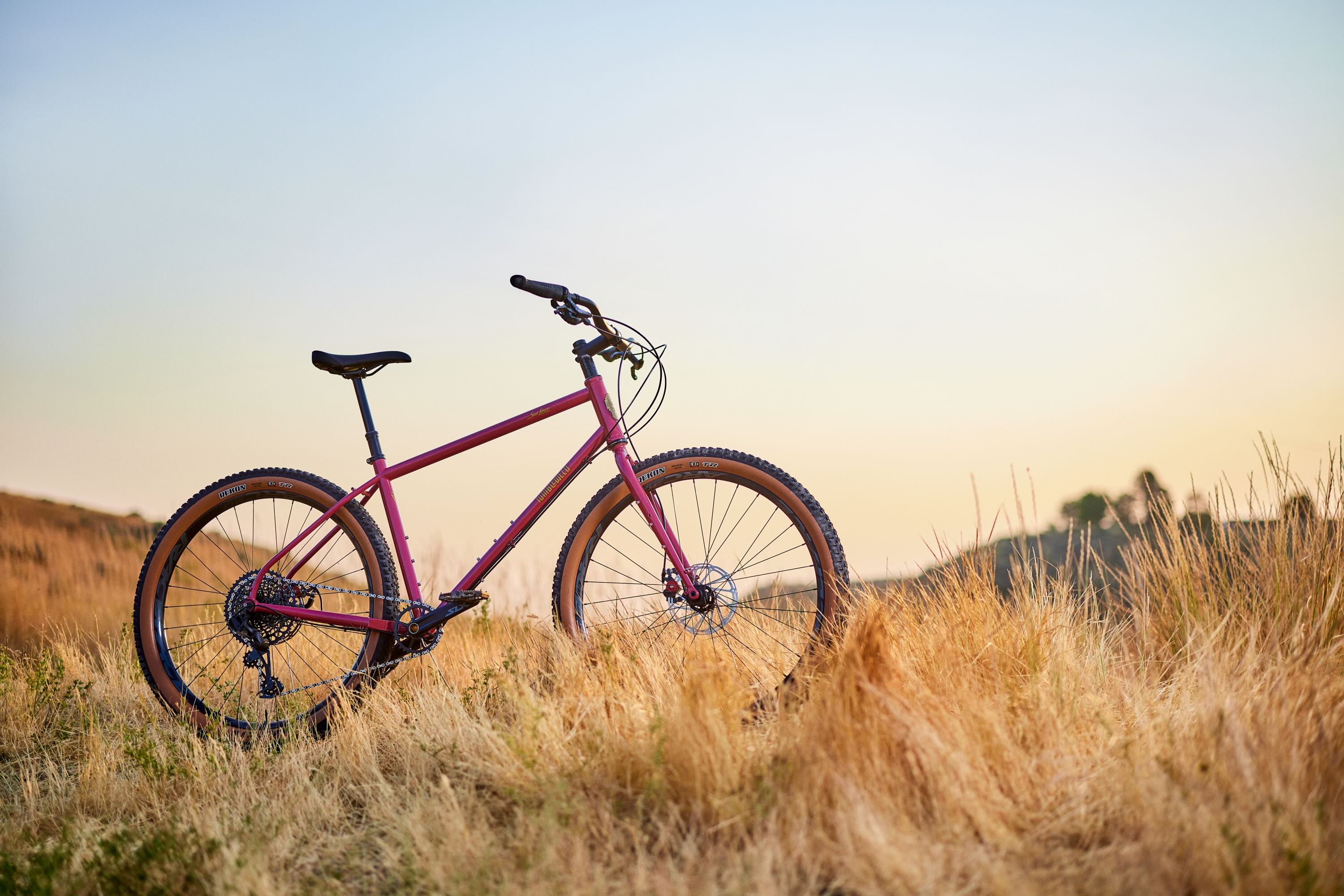
We sometimes get asked why we spec the Rohloff on the Prospector and why we don’t offer a Pinion version, and I thought it would be helpful to just answer that question in one place for people to be able to find. We could spec any drivetrain on this bike, and we’ve made the very deliberate decision to use the Rohloff Speedhub 14 speed internally geared hub.

Photo cred: Greg McCahon
For this article, I’m not going to go into every technical spec for this drivetrain: there have been many articles written over the last several decades about it, so I’ll just refer to my personal experience and design decisions and priorities.

Photo cred: Ryan Wilson

Why I Use the Rohloff SPEEDHUB
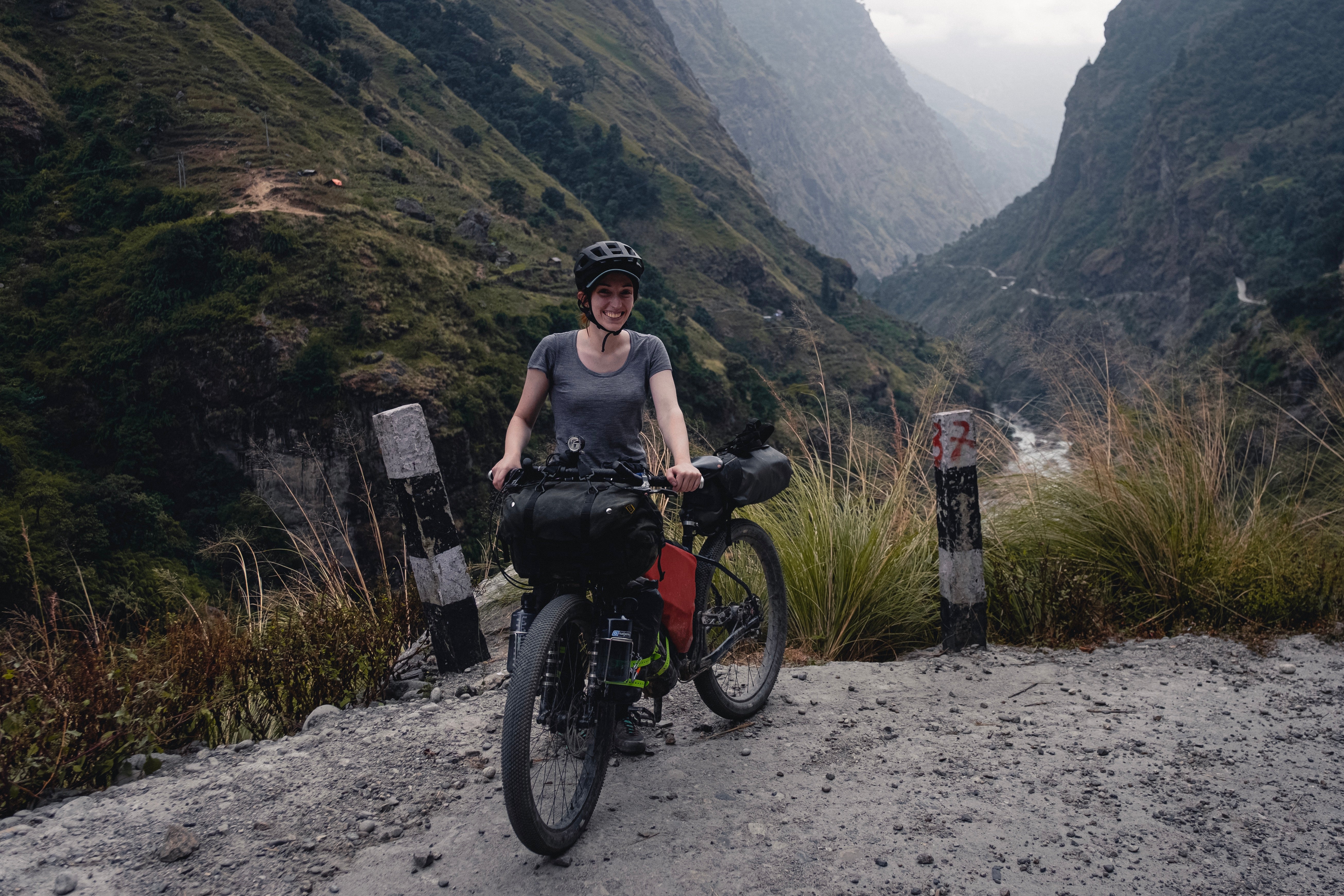
I’ve been using the Rohloff SPEEDHUB since 2010 on my everyday bikes as well as bikes that I’ve taken on multi-week international tours in remote locations in South America, Central Asia, India, New Zealand, and around Europe — and I have never had a failure or problem. This drivetrain is handmade in Germany and has been around since the late 1900s.


There are several advantages to using the Rohloff on a loaded touring bike. I like to think about the potential points of failure on the bikes that I ride and eliminate them if possible.

Photo cred: Ryan Wilson
Internally Geared
The main benefit of the Rohloff compared to a derailleur drivetrain is that you get a very similar overall gear range (526%), but everything is internal and running in an oil bath. There is nothing hanging down on the bike that can get knocked out of alignment, snagged in mud or branches, or broken off on rocks. The indexing all happens internally and is not reliant on precise cable tension like a conventional drivetrain. You don’t even need a shifter to shift gears with the Rohloff. The shifter has two cables that turn a pulley on the outside of the hub, and if something were to happen to the shifter or cables, you can shift the hub with an 8mm wrench manually.
Fewer Failure Points
You are also able to eliminate additional failure points from a derailleur drivetrain besides the derailleur, like the freehub body on a conventional rear hub. I’ve personally broken several freehubs from expensive, fancy hubs on my touring bikes, and they always happen in the worst possible place. With the Rohloff you essentially get a singlespeed drivetrain, which happens to be the most elegant and reliable system possible.
Better Mud & Tire Clearance
Because the Rohloff acts as a singlespeed drivetrain, the chain doesn’t move side to side like with a derailleur, which means that we were able to design the Prospector frame to fully take advantage of all of the tire and mud clearance that the Rohloff allows with its 57mm fixed chainline.


Photo cred: Ryan Wilson
Enables Incredibly Strong Wheel
Another big advantage of the Rohloff is its physical design. The hub has wide and tall symmetrical flanges that work to create an incredibly strong wheel with exactly even spoke tension left to right. A standard 32 hole Rohloff wheel is strong enough for a mountain tandem. This is one of the most important benefits for a touring bike: ultra strong wheels.
More Frame Design Flexibility
One more big reason for using the Rohloff on the Prospector is that it’s not a proprietary drivetrain that requires a custom frame to be built around it. We designed our own rear dropouts to integrate with the OEM anti-rotational torque arm on the Rohloff, but it’s not 100% necessary. We did that because our goal was to make the Rohloff as plug and play as possible, and to take advantage of all of the benefits of that system. However, because the Prospector has standard dropouts, we’ve run them with Rohloffs, as single speeds, and with derailleur drivetrains, you’re not tied to one system.

Inexpensive Operation & Maintenance
Compared to just about any modern drivetrain, the Rohloff is incredibly inexpensive to operate. You pay for the drivetrain up front, but it essentially never wears out and requires almost no maintenance outside of a yearly oil change on the hub that can be done in about 30 minutes. The steel cog on the hub can be flipped backward to extend its lifespan, and a replacement is around $20. You can use any basic 6-10 speed chain, and we spec a super long-lasting steel chainring on our builds. Compare that with the $100-400 replacement cost for a 12-speed wide range cassette and $45-80 for a corresponding chain, plus the derailleurs that will need to have jockey wheels replaced and pivot bushings, etc. and the Rohloff becomes a much cheaper drivetrain in the long run when looking at TCO (total cost of ownership).

Photo cred: Greg McCahon
If you’re somebody who likes to ride your bike hard, put it away wet and not do a lot of work on it, this is a great drivetrain option for you. When I was a full time bike mechanic I loved riding my Rohloff bike everyday because the last thing I wanted to do with my free time was service my own bike after doing that for other peoples’ bikes every day.
So, Daniel… Why Don’t You Spec the Pinion?
So that brings us to why we don’t spec the Pinion on our bikes. The Pinion is a newer internal drivetrain that seems to be gaining popularity. If the Rohloff didn’t exist, and I was comparing the Pinion to a derailleur drivetrain in a vacuum, I would strongly consider running the Pinion.
However, since I’ve already talked about some of the potential failure points that the Rohloff eliminates compared to a derailleur drivetrain, let’s look at those.
First of all, the Pinion is an internal gearbox drivetrain that replaces the crankset and bottom bracket on a bicycle, and requires a proprietary frame that must be built specifically for this drivetrain, locking you in (not to mention proprietary crank arms).
The second big downside is that the Pinion drivetrain requires a standard rear hub, which not only adds a big failure point that the Rohloff eliminates, but it introduces a new problem which is excess slop in pedal engagement because you have ratcheting in both the gearbox itself as well as the freehub body on the hub. The first time I tried a Pinion bike I was shocked that there was almost a full quarter turn of the pedals before the gearbox and freehub body both engaged. This pedal slop can be reduced by using a higher end hub with faster freehub engagement, but it doesn’t eliminate the failure point of the freehub body itself (One of the freehub bodies that I destroyed on a tour was one of the high end brands that has an instant engagement clutch system). You also end up with a weaker rear wheel since you don’t have the oversized and symmetrical hub flanges like you do on the Rohloff.
Another disadvantage of the Pinion is the rider weight limit of 250lbs, which may or may not be a problem for most people, but it’s definitely not big guy approved.
The final issue for me is weight. I’m certainly not a weight weenie, and I tell people all the time that weight doesn’t really matter much for touring bikes since you’re going to be loading them up anyway, but if you’re comparing two drivetrains with similar concepts, it’s a bullet point to mention. The Pinion weighs a couple of pounds more than the Rohloff. Our standard Rohloff Prospector bike in size large with steel frame, steel fork, steel chainring and 2.8” tires weighs around 33lbs, while one of the popular brand's “influencer designed” Pinion-equipped touring-specific models with an aluminum frame comes in at 35lbs.
Reliability & Versatility — the Gold Standard Drivetrain
In conclusion, we design our bikes for maximum reliability in harsh conditions, and I like to think about the ways to avoid the common failure points in most touring bikes. We can choose any drivetrain and spec on the planet for our bikes, and for us the Rohloff has been our choice since the beginning and we have zero regrets. For me, having the strongest system that is the least proprietary and most adaptable is what I prefer.

Read more

We caught up with Dan Lenaghan, Tumbleweed builder and staff member, to ask him about his rider origin story, his bike, and more. If you've customized a build with us, chances are good you've inter...
This edition of Rig & Rider features Stargazer owner Willi Fast. We built up a Starry Night Stargazer for Willi in 2023 and he’s been adventuring on it ever since.