Rig & Rider: Ryan Wilson Reflects on a Decade on the Road
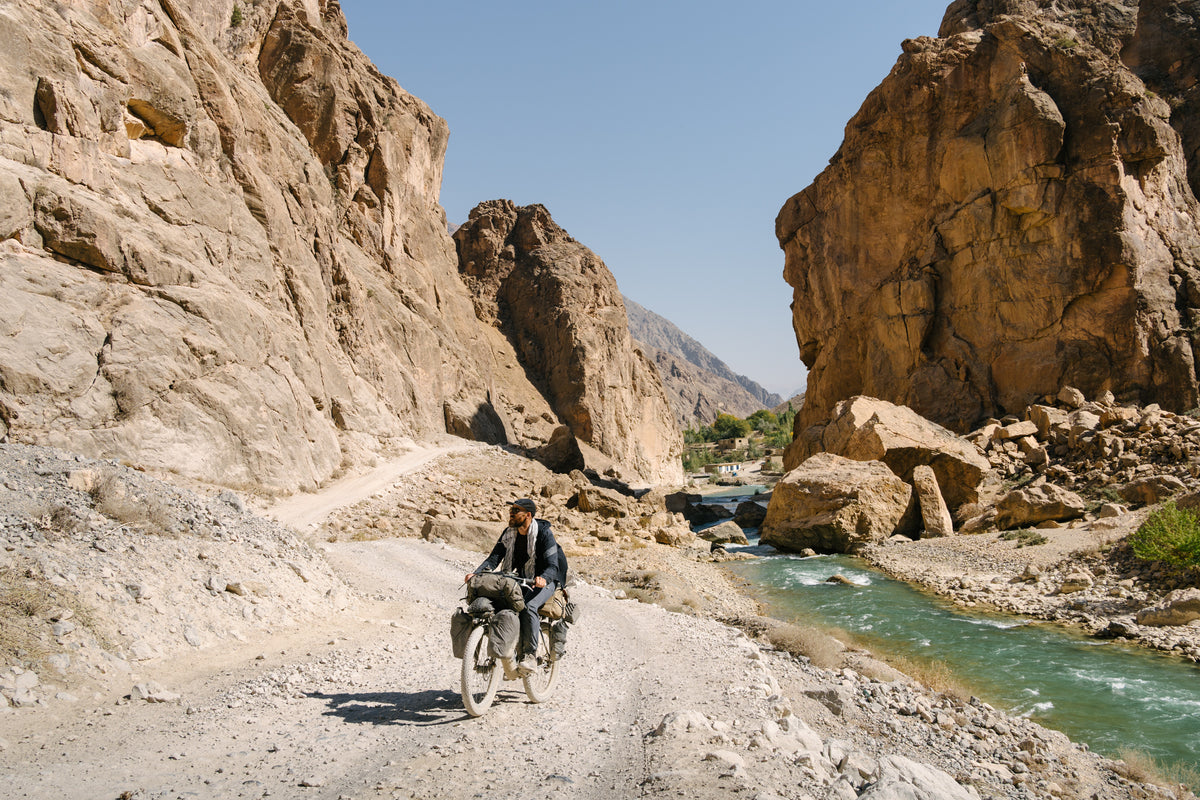
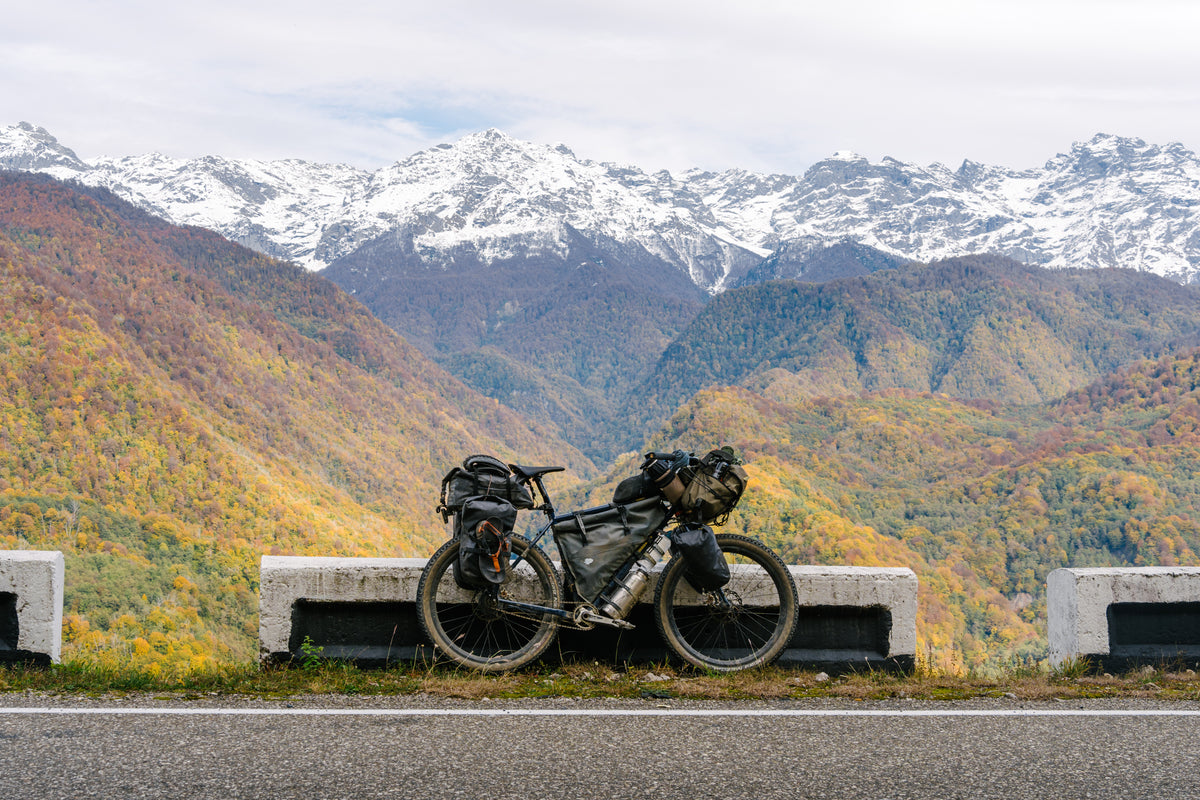
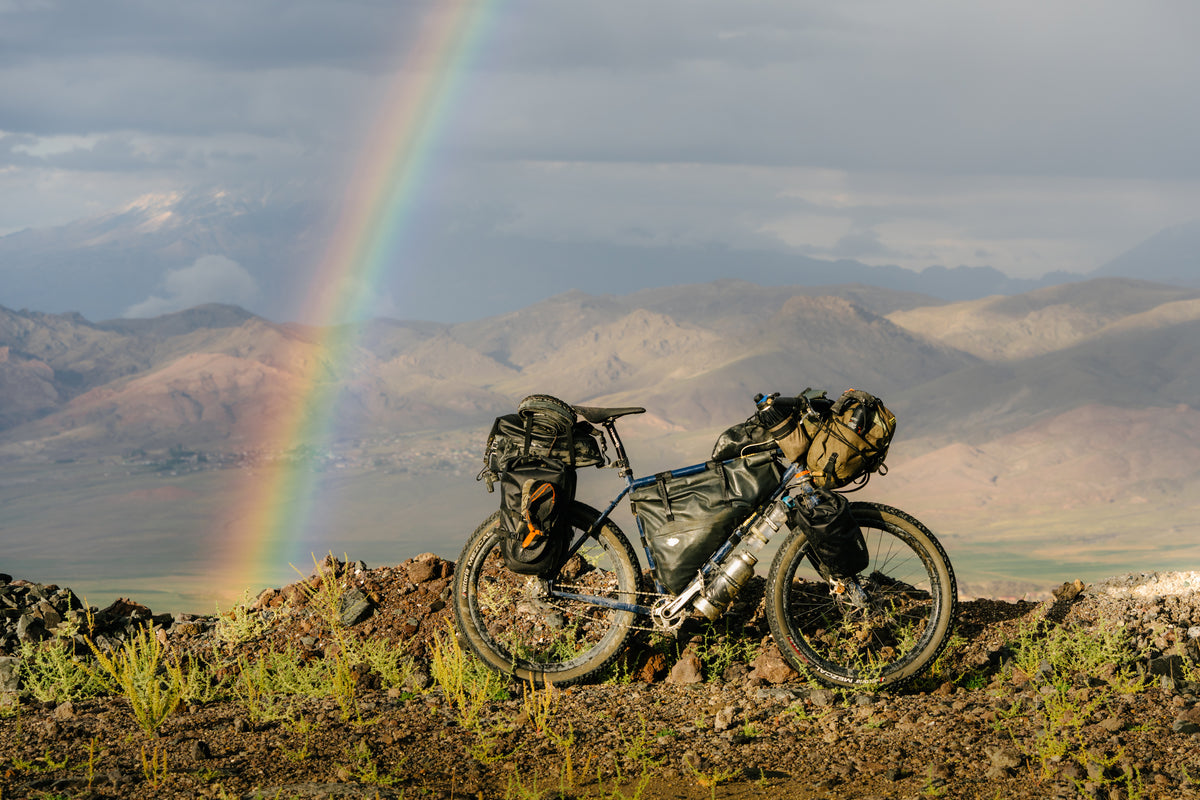
We're lucky to support the type of world cyclists who truly embody the spirit of adventure that's at the heart of Tumbleweed. No one epitomizes the Tumbleweed ethos like Ryan Wilson. Ryan has been exploring the world on his Prospector since 2019, and recently hit 10 years on the road.
Ryan is known for his thoughtful reportage published on the Radavist periodically, as well as his stunning travel photography. He's also one of the longest-standing riders of the Tumbleweed Prospector. We checked in with him recently and caught up on his reflections of traveling the world for the past decade.
You've been on the road for 10 years now. Can you share your background before you started cycling the world full-time — what were you doing right before that first trip?
Before I started bike traveling, I was living in Los Angeles, California, and working as an audio engineer for film and television. I got into cycling as an adult just to commute and give myself something to do that didn’t involve sitting in front of a screen, but I really was never an outdoorsy type of person until that. It was in the San Gabriel Mountains on the edge of LA and the Sierra Nevada Mountains a couple of hours to the north that I really fell in love with riding bikes and being in nature.
Where did you start, and what made you decide to go all-in on this rather than a shorter tour or sabbatical?
I was really more of a roadie back before I started touring full-time. I would regularly do weekend trips to ride in different parts of the Western US, but it was all just day rides, and I really hadn’t done much of any multi-day riding or even camping in my life. I hadn’t ever even been outside of the US/Canada, and I never had a passport. But back in 2015, I was surfing across Google Earth one day, and I stumbled upon the Cordillera Blanca in Peru, and I just knew that I had to go and see this place with my own eyes.
At the time, I was working my normal full-time job, but I had some vacation time saved up, so I got my first passport and used up all of my vacation time to spend three weeks in the Peruvian Andes. The scale of the Andes kind of forced me to get into the idea of multi-day trips and camping, and I guess I was hooked by how many options that opened up for me.
In some ways, the trip was kind of a disaster because it was already the shoulder/rainy season, so it stormed every single day, and I got really sick on basically the second day of the ride. I spent a week being violently ill in a hotel, but at the same time I was blown away by the landscape of the Andes, so fascinated by the culture and the history, and was really inspired by the idea of exploring a new place every day.
I remember sitting in the Lima airport on my way home from that trip and looking at the map further to the south from the area I had just visited, and I knew from right then that I needed to figure out how I could come back as soon as possible and do a much longer trip. About seven months later, I was landing back in Lima and starting my ride toward Ushuaia from there.


If someone's interested in starting bike touring, where should they start?
My recommendation would probably not be to do what I did and just head straight away for a solo tour through Peru during the rainy season haha. I think these days there are so many established routes around the world that I would recommend finding something close by that isn’t a huge commitment and seeing how you like it. Then, you can build off of that and dream about a longer tour in a further-flung destination.
Ten years in, how do you approach choosing your next country, region, or tour? What pulls you toward a place like Afghanistan versus, say, Kazakhstan or the Andes?
Usually this is something I’m trying to figure out as I go, depending on the time of year it is and where I’m at. Especially in Asia, there are a lot of places where borders and visas are tricky, so often it’s just a matter of where it’s physically possible to go, depending on the time of year.


Generally, there are certain types of places that really inspire me. Anywhere with big mountains or deserts, where I am interested in the culture, and ideally where it is possible to wild camp without too much hassle. I wouldn’t say that I’m really a touring “purist” in the sense that I want to make one big continuous line through the world and visit every country. Really, I just want to spend as much of my time on this earth in the places that inspire me.
As for Afghanistan, back in 2019 I rode along the Afghan border in Tajikistan, and I remember being so fascinated by seeing what seemed like a totally different world just a short distance away, on the Afghan side of the river. I could see people walking through the streets of small Afghan villages, and sometimes they would look back over and give a big wave, with the dramatic mountainous backdrop behind them. It just seemed like this very mysterious place that I’d mostly only heard about on the news for negative things, and I was always curious about seeing it for myself. So, when I came back to Tajikistan in 2025 and met a couple of Japanese travelers who had come from Afghanistan and told me about their experience, the gears started turning, and I think it’s hard to talk myself out of something once that seed is planted.


One other consideration I have these days is language. While I still do enjoy parsing through conversations over translation apps or by miming my way through interactions with local people, one of the key things that brought me back to South America this year (aside from the always amazing riding) is the fact that I can sustain a conversation with basically anyone I meet. After a long stretch in places where I don’t speak the local language, it is always nice to go to a place where communication can go a step deeper than Google Translate.
Do you plan routes in detail ahead of time, or figure it out as you go? How has that changed over the years?
The vast majority of the time, I’ll have a lot of ideas sketched out for routes that I want to do, though it always changes once I’m there and I start riding. I still love staring at maps and figuring out how I can connect different places in interesting ways, so oftentimes I’ll have a few options mapped out, and I’ll just figure it out as I go once I’m on the ground. This also means I have a bunch of routes mapped out in places around the world that I still haven’t done. I actually just finished up riding a route in Peru a couple of days ago that I had originally mapped out for my first tour through South America in 2016 but didn’t get a chance to do back then.
When I first started, I would take mostly well-established routes. I relied a lot on Neil and Harriet Pike’s routes through the Andes on that first big trip. But slowly I got more comfortable mapping out tracks of my own and going for it.
Was there a place that completely surprised you — somewhere that turned out totally different from what you expected going in?
It’s hard not to say Afghanistan to that. I was just blown away by the level of hospitality that I received in a place that I was more than a little concerned that I might not be welcomed so warmly as an American. I was invited to stay in people’s homes every day. It was difficult to find places that would let me pay for my own meals. I had local people constantly looking after me and trying to help me throughout my time there. Often calling to check up on me to see if I needed any help, even if I was far away. It doesn’t matter how difficult the conditions were or how little or how much people had; they would offer me anything to make my experience in their country a positive one. Really, it is hospitality at a level that can become overwhelming, and it’s a place that I still think about every day since I left there.
What are the biggest challenges of being on a long-term trip like this by yourself?
For me, it’s hard to travel around the world and see the conditions that some people live in based simply on the coordinates they were born in, and find any challenges that I face on the road as much more than little speed bumps. When I’m on some brutal climb, and it’s freezing cold, it’s easy to remind myself how fortunate I am to be able to choose what I get to do with my day-to-day life. But probably the most difficult thing is keeping up with friends and family back home when I’m gone for so long.
Can you share a story that really captures what keeps you doing this — a moment with a stranger, a place, a "why I do this" kind of memory?
I remember being in Southeastern Türkiye a few years ago. The landscape of the region is incredibly beautiful, but the Kurdish people who live in this particular area are some of the most hospitable on Earth. One day I had come down from the mountains as it had gotten dark, and ended up in a tiny village with no idea where I was going to stay for the night. The moment some locals spotted me at the one shop in town, basically everyone in the village started calling around and immediately sorted me out a spot to stay with the Imam of the local mosque and his family at his house.This was one of the warmest and most welcoming families that I have ever met on the road. I remember they gave me a gigantic jar of honey from their bee farm that must have been 1kg, and it took me like 6 months of touring before I finished it, so a piece of their hospitality came on the road with me for quite a while haha. They still send me occasional updates from their bee farm and always ask when I’m coming back to stay with them longer! These are the kinds of spontaneous interactions that really make bike traveling memorable.


How do you handle the logistics most people worry about — visas, safety, water, where you'll sleep each night — in some of the more remote or complicated regions you've ridden through?
These are things that I’ve gotten more comfortable with over time. I remember when I first started, I would stress out about where I might sleep for hours before I ever needed to find a spot to camp, but now it’s not really something I worry about. I’ve gotten better at roughly knowing how far I’m going to be able to go, and can vaguely plan my days around a village where I’ll know there is a hotel or an area that doesn’t have a lot of people, so I can find a quiet place to pitch my tent. These days there are also apps like iOverlander or Rolling Around where people can mark some options for wild camping or hotels on a map, to use as a backup in many places. Worst-case scenario, I’ve also now gotten comfortable asking a local if I can pitch my tent somewhere near their home, and I think I’ve only been rejected once… Often they will even offer up a room or find you a place.
In terms of safety, I just try to use my best instincts. If I meet someone on the road and I’m getting a bad vibe from them, I’ll probably tell them I’m going a different way than where I’m actually going. If I’m turning left at the next fork in the road, I’ll tell them I’m turning right or heading toward a bigger city that isn’t actually on my route. If they ask me where I’m sleeping for the night, I’ll tell them I’m heading for a hotel in a town, even if I know I’m camping. On that note, I always try to camp out of sight whenever possible, even in places that I believe are safe. Plus, I’ll always listen to local advice about safety.
Visas are definitely tricky, depending on where you’re from and where you’re going. This is one of the reasons I like South America so much, because there is virtually no hassle getting in or out of countries. For trickier places, I just try to do my research online and hope for the best.
In terms of water, this varies a lot based on the region, but if I’m in very arid areas, I’ll do a lot of research beforehand by studying satellite maps and looking for any settlements or information from other people who may have ridden through the area. If I’m not 100% positive, and I’m in a place where I don’t have much information, I’ll be asking a lot of local people once I’m there, and I’ll usually carry quite a bit more water than I think I’ll need, just in case one of the water supply points doesn’t actually exist. On that note, one of the first words I always learn in the local language is “water”!

Solo travel versus riding with others — you've done both. How does the experience change?
Both have their plusses and minuses. I love solo travel for the total freedom that it brings, to travel at exactly your own pace, and the fact that I find local people are more likely to approach you if you’re by yourself. If you’re in a group of people, speaking a non-local language, it can put up an extra barrier that some local people won’t try to cross.
Obviously there are a lot of situations where it’s great to have riding partners. Sharing in the highs and commiserating in the lows. Or when you have to make a difficult decision, it’s nice to have other people to bounce that off of. And of course there is some extra safety in numbers. I think a lot of it comes down to personal preference and probably personality type. I know there are a lot of people who would find traveling solo for so long quite miserable, but for me it works.
Let's talk gear — walk us through your full setup. What's on the bike, what's in the bags, and what's changed about your kit and setup over nine years of riding?
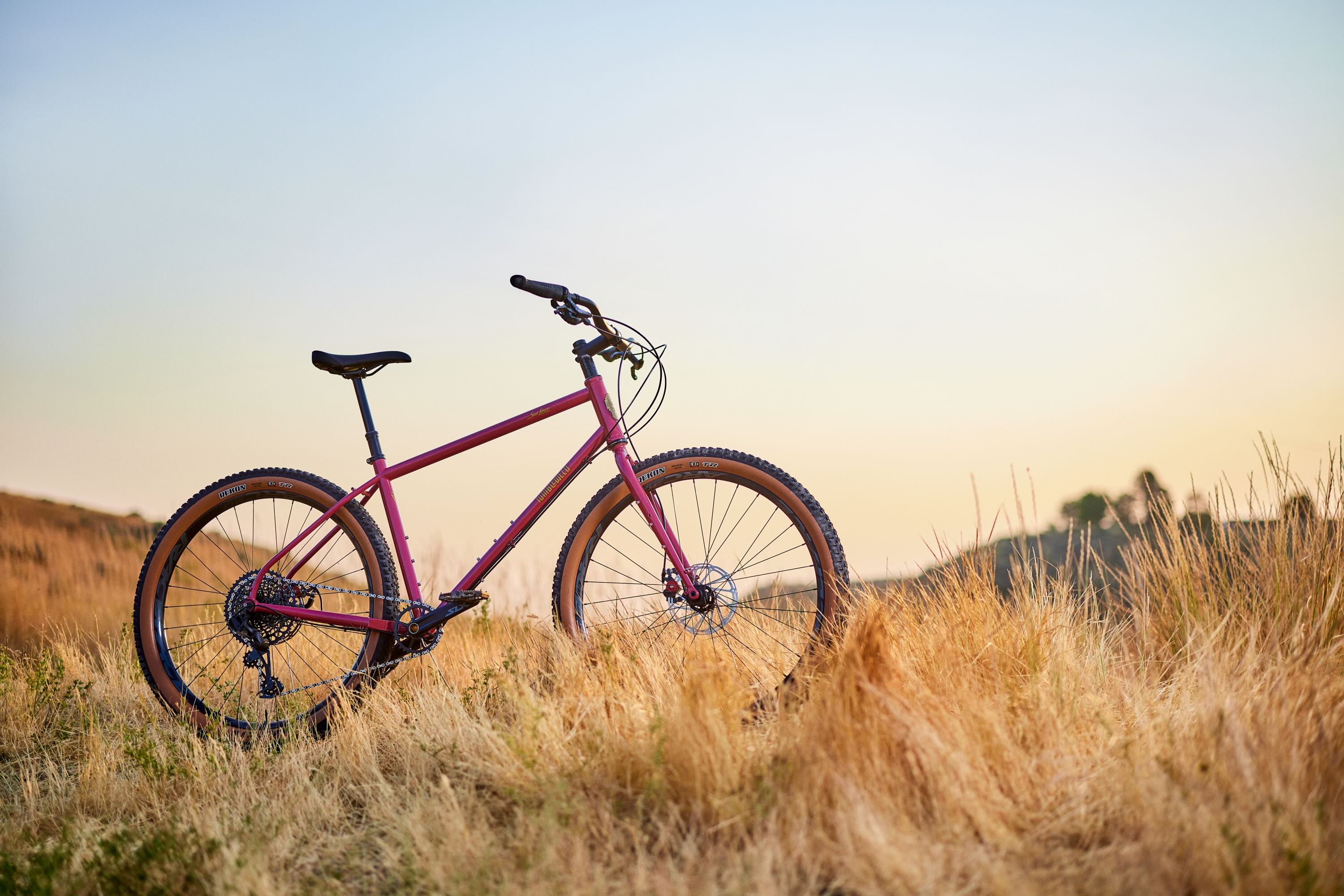
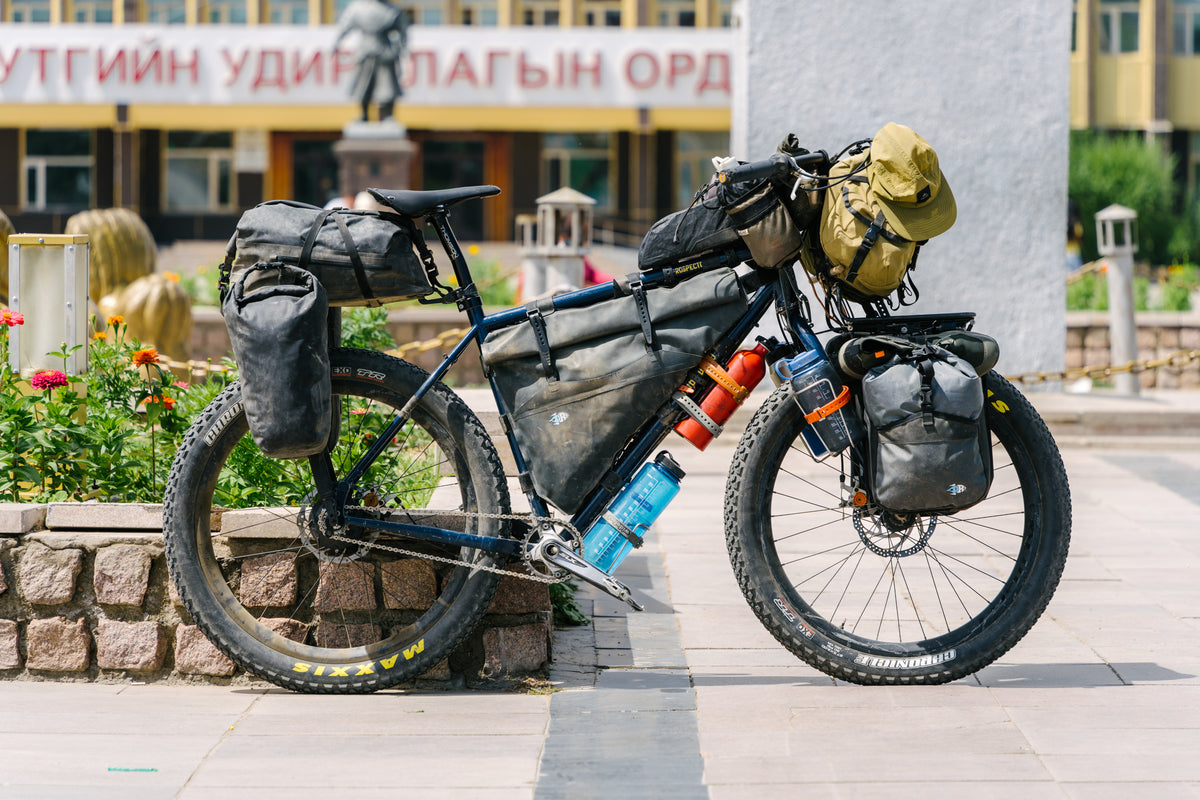
Here are the bike specs:
- Frame/Fork: Tumbleweed Prospector
- Drivetrain: Rohloff Speedhub 500/14
- Crank: Shimano XT
- Chainring: 32t Tumbleweed Stainless Steel
- Rear Sprocket: 16t Rohloff
- Rims: Knight Composites 27.5+ carbon prototypes
- Front Hub: SON Dynamo
- Tires: Vittoria Mezcal 27.5 x 2.6” XC Trail - Tubeless ready
- Brakes: Paul Klamper
- Brake Levers: Paul Canti Lever
- Handlebar: Jones H-Bar Loop
- Grips: Ergon GP1 BioKork
- Saddle: Brooks Cambium All-Weather C17
- Seatpost: Thomson Elite
- Stem: Thomson X4
- Pedals: One Up Composites
- Cargo Cages: Revelate Designs Tarsier
- Front Rack: Tumbleweed T-Rack
- Rear Rack: Tumbleweed Macro Pannier rack


In my front Bags by Bird Goldback handlebar bag, I’ve got my sleep system, which currently consists of a ZenBivy pad, quilt, and pillow, along with my laptop and some other electronics. All of that is nested inside a Tortuga packable backpack, which is always great to have when you’ve got days off in cities or want to go grocery shopping at the local bazaar.
In the lower portion of my Revelate Designs custom framebag, I’ve got an MSR water filter and a big pouch full of spare parts. In the upper portion, I keep my tent poles/stakes, a full-size carbon tripod, a Lezyne Micro Floor Drive HV pump, and two 20k mAh power banks.
In one of my Revelate Polecat fork bags, I have my Hyperlite Mountain Gear Crosspeak 1 tent. As a general rule these days, if I’m doing a solo trip, I won’t carry a tent where the body stuffs bigger than what I can fit in my Revelate fork bag (3.5L), and the Crosspeak fits the bill perfectly. It’s really nice not to have to stuff a damp tent into a bag with other items in the morning, and it’s ideal to have the tent so easily accessible when I arrive at my campsite.
In the other fork bag, I have my cold-weather gear, like my Rapha down jacket, Black Diamond merino beanie, Ornot Merino gloves, and a Buff neck gaiter.
In my non-drive-side 14L Revelate Portage pannier, I keep all of my clothes and my dopp kit, with my rain jacket on top for quick access. The drive-side pannier is mostly reserved for food and various kitchen items, so when I lay my bike on the non-drive-side, I can still easily access my food when I’m taking a break.
In my prototype Revelate trunk bag, I carry my MSR 1.3L pot, an Esbit Alcohol stove, along with the rest of my electronics and some first aid items.
In my Revelate downtube Joey Downtube bag, I carry two spare tubolito tubes, 8oz of spare Orange Seal tire sealant, some rim tape, and spare tubeless valves.
Any pieces of gear that have earned a permanent spot in your bags — the stuff you'd never leave home without?
I think the only pieces of gear that have made it from my first long touring setup 10 years ago to my current-day setup are my Paul Klamper brakes. They’re still the same ones I was using at the start.
I’d also have to include my Ombraz sunglasses. As a professional glasses-breaker, going armless has been a game changer. I really could not imagine going back to arms.
A more recent addition has been the torso-length Thermarest Z-lite foam pad. I really don’t know how I went so long without one. While I do still bring an air mattress for comfort/warmth, I’ve noticed that I have way fewer air mattress punctures and delamination issues now that I have the foam mat under it. Plus, it’s very useful when I want to take a break and not sit on some jagged rocks on the ground, or simply as a backup in case I have a catastrophic air mattress failure, and it adds a few degrees of warmth to my air mattress. The only downside is that it’s gigantic and hard to find a spot for, which I guess is why I hadn’t added one to my kit until the last couple of years.
You’re one of the longest-term, heavy duty users of the Prospector — you’ve been using it for what it was originally designed for. Daniel built your wheels and sent you this frameset back in 2019, you’ve been using it all over the world — what’s your experience been with it as your setup has evolved and you’ve gotten to know the bike?
I remember the prototypes of the Prospector were floating around when I started my first big tour, and I was thinking that was the kind of bike that would perfectly suit the type of riding that I wanted to do. Unfortunately, they weren’t officially launched until a few months after that trip started, but by the time I wrapped that trip up, I was excited to get my hands on a Prospector before I headed to Central Asia.
The number one priority for me with a bike for long-distance traveling in remote and rugged places is reliability. I love riding my bike, but I don’t really like fiddling with stuff all the time to make it work properly or worrying if everything is going to make it to my destination. That was the real selling point for the Prospector for me. The close integration with the Rohloff internal gear hub means that I spend essentially zero time dialing in the shifting on my drivetrain. I don’t worry about some gust of Patagonian wind knocking my bike over and snapping my derailleur, or my cassette wearing down from Afghan dust and feeling my shifting start to deteriorate.

In addition to the reliability, I love the confidence-inspiring stability from the Prospector. I love that I can load it up with just about any configuration of bags and gear, and the bike is still going to feel like a bike, rather than a wobbly mess. The best compliment I can give to the Prospector is that it just kind of disappears underneath me, and I don’t have to think about it. Instead, I can focus on the places it enables me to see.
I’ve switched up my setup with the Prospector quite a bit over the years, from more front-loaded setups to a balance of front- and-rear-loaded setups, and the beauty is that it works with all of them. I’ve gone super heavy for trips through super remote parts of the Atacama Desert where you have to bring weeks of food and 3+ days of water at a time, and I’ve taken slimmed-down setups through Colombia or Thailand, where you can always find a bed to sleep in and a warm meal at the end of the day. And really, it excels at both.

What's next? Any regions or routes you're eyeing?
There are so many, honestly. I have been trying to go to China and Pakistan for many years at this point. Something always seems to come up and prevent that from happening, but I hope it will happen soon. I would love to go to Northern Africa, to the Arabian Peninsula, spend more time in India, the Balkans, etc. Iran is probably at the very top of my list based on the diversity of the landscape and the reputation for hospitality that the people have, but unfortunately that doesn’t seem very likely any time soon. But hey, if you told me 5 years ago I’d ride through Afghanistan, I would have said you were crazy, so stranger things have happened.